
Crowns & Bridges
Damaged, weakened or missing teeth can make eating uncomfortable and affect the way your smile looks. We can help restore strength, function and confidence.
At Jaffar Dental, we first identify what is causing the problem and then recommend the most suitable way to restore the tooth.
A crown can protect and strengthen a tooth that is cracked, heavily filled or weakened, while a bridge can replace a missing tooth and help restore your bite.
Each restoration is carefully planned by Dr Kevin around your tooth structure, bite, function and appearance, with close attention to fit, comfort and long-term results.
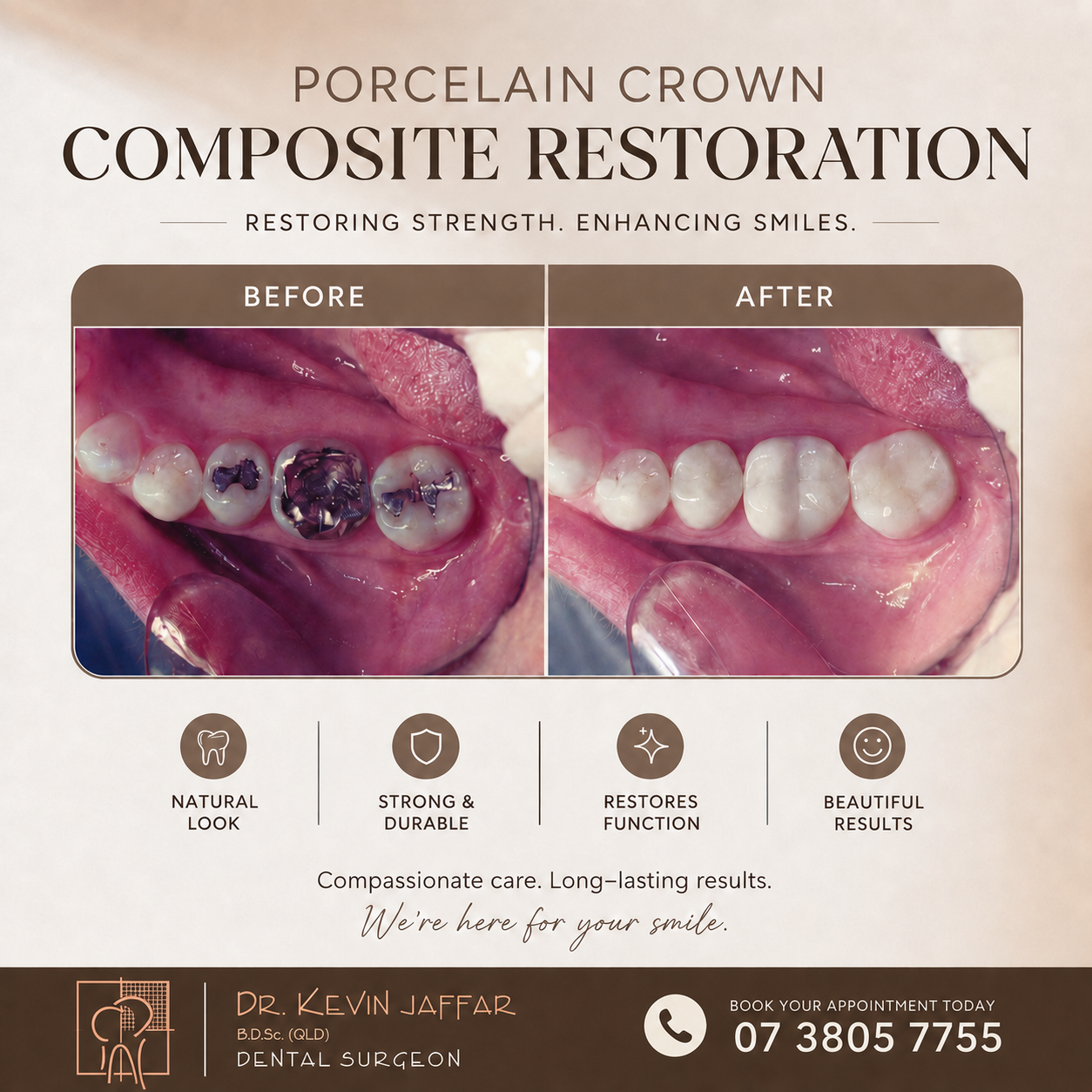
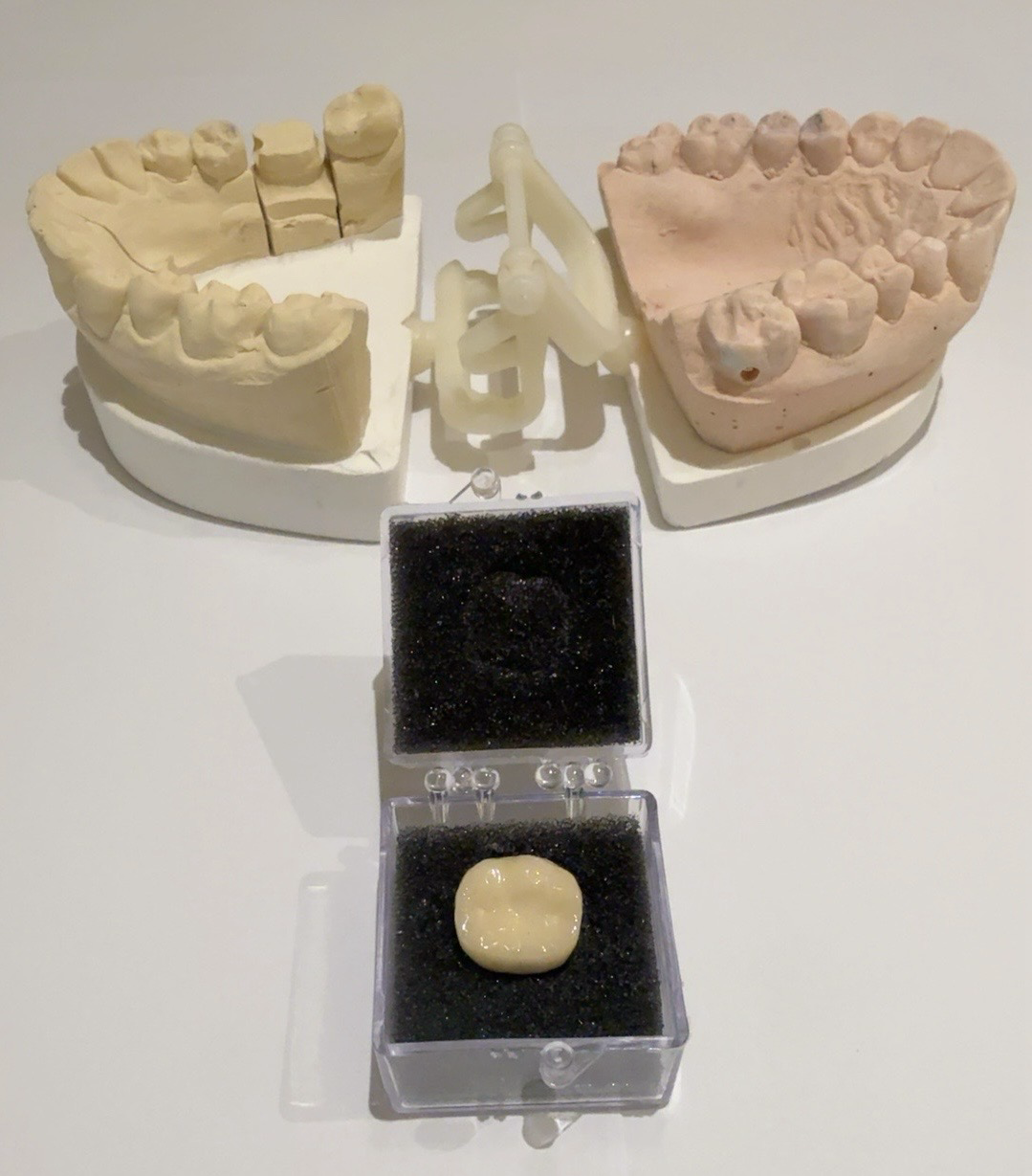
What Is a Dental Crown?
A dental crown is a custom-made restoration that fits over a damaged or weakened tooth.
It may be recommended when a tooth has been heavily filled, cracked, worn down or treated with root canal therapy and needs additional protection.
A crown helps restore the tooth’s shape, strength and function while protecting the remaining natural tooth underneath.
What Is a Dental Bridge?
A dental bridge is used to replace one or more missing teeth.
It is supported by the teeth on either side of the gap and fills the space left by the missing tooth or teeth.
A bridge can help improve chewing, appearance and support the surrounding teeth by preventing the gap from being left untreated.
When Might I Need a Crown or Bridge?
A crown may be recommended if a tooth:
* has a large filling and very little natural tooth structure remaining
* is cracked, fractured or weakened
* has been worn down
* has had root canal treatment
* needs its shape or function restored
* requires additional protection to reduce the risk of further damage
A bridge may be suitable if you are missing one or more teeth and the neighbouring teeth are healthy enough to provide support.
Dr Kevin will assess your teeth, bite and overall oral health before recommending the most appropriate option.
What Materials Do We Use?
At Jaffar Dental, our crowns are individually planned according to the tooth, your bite, appearance and clinical needs.
We use porcelain crowns with a gold-alloy lining, combining the strength and support of gold alloy with a natural-looking porcelain outer surface.
A shade match, multiple impressions and detailed measurements are taken so the restoration can be designed to blend with your surrounding teeth and fit your bite accurately.
Dr Kevin is personally involved throughout the design process, carefully reviewing the fit, shape, colour, bite, function and overall appearance of each crown. Considerable time and attention goes into this process because even small details can affect how comfortably and naturally a crown functions.
Your crown is then custom-made to these specifications before returning to the practice for the final fitting.
What Is Involved in Getting a Crown?
A crown is completed over two appointments.
At the first appointment, Dr Kevin carefully prepares the tooth so the crown can fit securely over it. This is usually the longer appointment and generally takes around one hour or more, depending on how many crowns are being prepared.
Multiple impressions and detailed measurements are taken, and a shade is selected to closely match your surrounding teeth. Dr Kevin then personally works through the design requirements for your crown, considering its fit, bite, shape, strength and appearance.
A temporary plastic crown is placed over the prepared tooth while your permanent crown is being custom-made. The temporary crown protects the tooth during this period but is not as strong as the final restoration, so some care is needed while wearing it.
The permanent crown usually takes around four weeks to be completed.
Your Final Crown Appointment
Once your permanent crown is ready, you will return for a second appointment.
This appointment usually takes around 30 minutes, depending on how many crowns are being fitted.
The temporary crown is removed and Dr Kevin carefully checks the new crown for:
* fit
* bite
* colour match
* shape and appearance
* comfort
Once both Dr Kevin and the patient are happy with the result, the crown is securely placed over the prepared tooth.
What Is Involved in Getting a Bridge?
The process for a bridge is similar to a crown, but the teeth beside the gap are prepared to support the replacement tooth.
Multiple impressions and detailed measurements are taken, and the restoration is carefully planned to suit your bite, function and appearance.
Once complete, Dr Kevin checks the fit, bite, colour and overall appearance before the bridge is securely placed.
Will It Hurt?
Local anesthetic is used to numb the area before the tooth is prepared, so you should not feel sharp pain during treatment.
You may notice some temporary sensitivity or tenderness after the appointment, particularly once the anaesthetic wears off.
If you have any concerns after treatment, we encourage you to contact us so we assess the area.
How Long Does the Process Take?
Crowns are completed over two visits.
The first appointment is generally at least one hour, depending on how many crowns are being prepared.
The permanent crown then usually takes around four weeks to be individually designed and completed.
The second appointment is generally around 30 minutes, although this may vary if more than one crown is being fitted.
Bridges may follow a similar timeframe depending on the number of teeth involved and the complexity of the restoration.
Can I Eat Normally After My Crown Is Fitted?
Once your final crown has been fitted, it is designed to function as a strong, long-term restoration that can be used for normal chewing.
We recommend being cautious while any anaesthetic is still active so you do not accidentally bite your cheek, lip or tongue.
Dr Kevin will let you know if there are any specific eating instructions for your particular crown after it has been placed.
How Long Will My Crown or Bridge Last?
Crowns and bridges are designed as long-term restorations and, with good oral hygiene and regular dental care, can last for many years.
Their lifespan varies depending on factors such as your bite, tooth grinding, oral hygiene, the condition of the underlying or supporting teeth and general wear over time.
Regular dental reviews allow us to check the restoration, surrounding teeth and gums and identify any concerns early.
How Do I Look After a Crown or Bridge?
Crowns should be brushed and cleaned just like natural teeth.
Bridges also require careful cleaning around and underneath the replacement tooth to help protect the supporting teeth and gums.
We will show you how to clean around your restoration and recommend any additional products or techniques that may be helpful.
Regular dental check-ups are important so we can monitor the restoration and the teeth supporting it.
Why Choose Jaffar Dental for Crowns & Bridges?
Dr Kevin has more than 30 years of experience in restorative dentistry and takes a careful, detailed approach to crown and bridgework.
Personal involvement in design
Dr Kevin is closely involved in planning each restoration, reviewing the fit, bite, shape, colour, function and appearance rather than treating the crown as a one-size-fits-all product.
Careful treatment planning
We assess the tooth, bite and surrounding structures before recommending treatment.
Attention to fit and bite
Multiple impressions and detailed measurements are taken to help achieve an accurate and comfortable result.
Porcelain with gold-alloy lining
Our crowns use a gold-alloy lining for strength and support, with a porcelain outer surface designed to achieve a natural-looking appearance.
Natural appearance
Shade matching and careful design are used to help the restoration blend with the surrounding teeth.
Clear explanations
We explain why treatment is recommended, what alternatives may be available and what you can expect before proceeding.
Ongoing care
If you have concerns after treatment, we encourage you to contact us so we can assess the restoration..
How Much Do Crowns and Bridges Cost?
The cost of a crown or bridge depends on the number of teeth involved, the type of restoration required and whether any additional treatment is needed beforehand.
After examining your teeth, we will explain the recommended treatment and provide you with a treatment plan so you understand the expected costs before proceeding.
Eligible private health insurance benefits may apply depending on your fund and level of cover, and eligible claims can be processed through HICAPS.
Payment plan options may also be available through humm for eligible patients.
Frequently Asked Questions About Crowns & Bridges
Do I really need a crown?
A crown is usually recommended when a tooth has become too weak or damaged for a filling alone to provide predictable support. Dr Kevin will explain why a crown is being recommended and whether other options are available.
Will my crown look natural?
Where appropriate, porcelain is selected and shade-matched to help the restoration blend with the surrounding teeth.
Why do your crowns use a gold-alloy lining?
At Jaffar Dental, our porcelain crowns are made with a gold-alloy lining underneath. The gold alloy provides a strong, supportive foundation, while the porcelain outer surface is designed to provide a natural-looking appearance.
How many appointments will I need?
A crown is generally completed over two appointments. The first is usually around one hour or more, followed by a second fitting appointment around four weeks later.
What is the temporary crown for?
The temporary plastic crown protects the prepared tooth while the permanent crown is being completed. It is not as strong as the final crown, so extra care is needed while wearing it.
Can I eat normally once the final crown is fitted?
Yes. Once the final crown is securely fitted, it is designed for normal chewing. Take care while any local anaesthetic is still active.
Can a crown break or come loose?
Crowns are designed to be strong, but like natural teeth, they can still be affected by heavy biting forces, grinding, trauma or changes to the tooth underneath. Contact us if your crown feels loose, uncomfortable or damaged.
Can a bridge be replaced if it becomes worn or damaged?
Yes. If an existing bridge is loose, damaged or no longer functioning well, we can assess whether repair or replacement may be appropriate.
Is a bridge my only option for replacing a missing tooth?
No. Depending on your situation, other options may include dentures or dental implants. We can discuss the advantages and limitations of the options appropriate for you.
Need to Restore a Damaged or Missing Tooth?
If you have a heavily filled, cracked, weakened or missing tooth and would like to understand your options, book an appointment with Dr Kevin.
We will assess the area, explain the available treatments and help you decide what is most appropriate for your teeth and long-term oral health.