
Periodontal Treatment
Bleeding gums, receding gums, persistent bad breath, gum tenderness or loose teeth can all be signs of gum disease. Periodontal treatment is used to help manage gum disease by removing plaque and tartar from around and below the gumline, helping to protect the gums, bone and tissues that support your teeth.
At Jaffar Dental, we carefully assess the health of your gums and determine how much gum disease is present and whether deeper cleaning is needed.
If periodontal treatment is recommended, Dr Kevin will explain what is happening, what treatment is required and how we can help bring the gums back to a healthier, more stable condition.
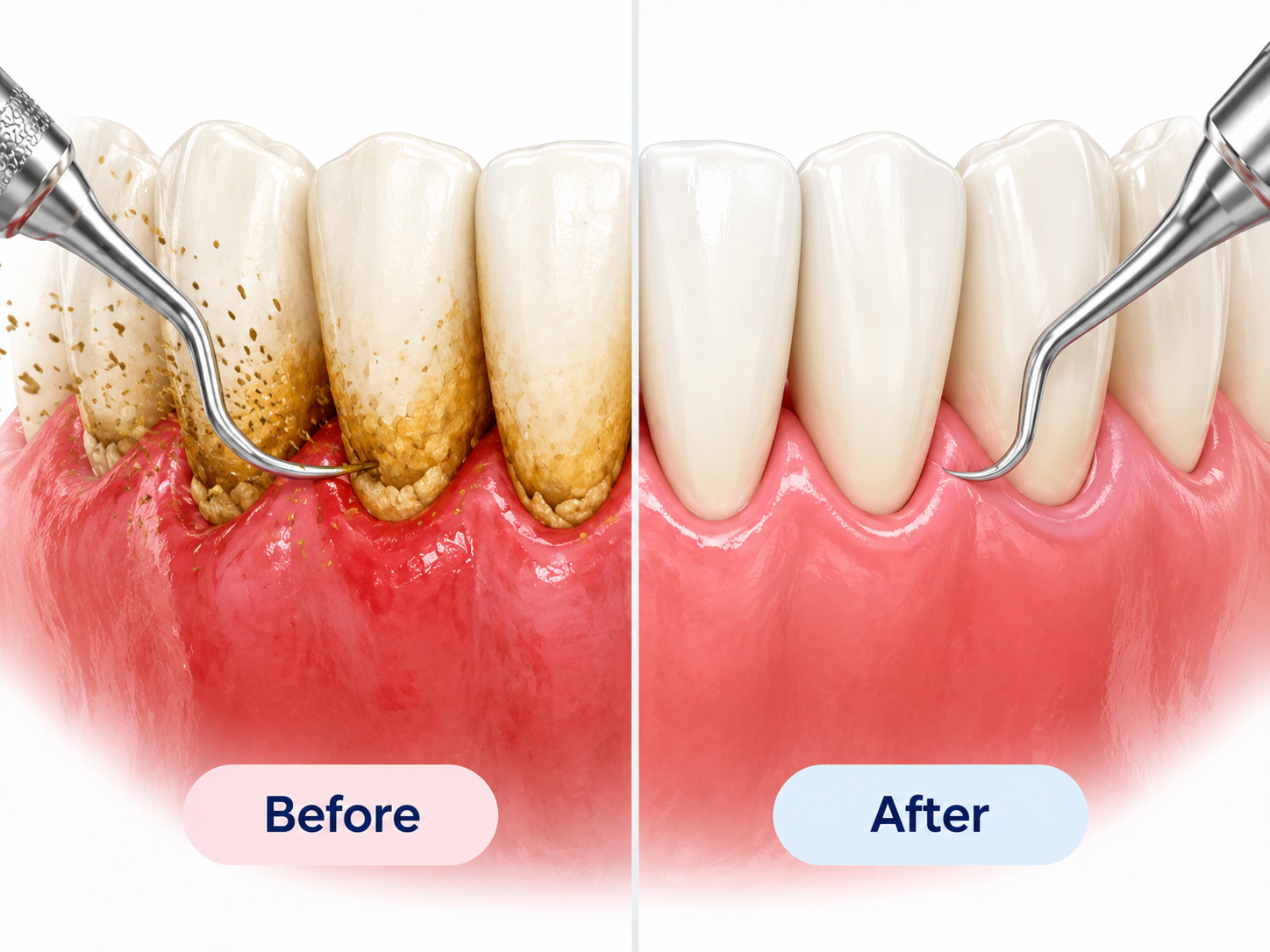
What Is Periodontal Disease?
Periodontal disease, also known as gum disease, is an inflammatory condition that affects the gums and supporting tissues around the teeth.
It often begins as gingivitis, where the gums may become red, swollen or bleed easily. If it progresses, the disease can extend deeper below the gumline and begin affecting the bone and tissues that support the teeth.
Periodontal treatment is used to help manage this deeper gum disease by removing plaque, tartar and bacteria from areas that cannot be properly cleaned with normal brushing or a routine dental clean.
Without treatment, more advanced gum disease can lead to:
* gum recession
* deeper pockets around the teeth
* persistent bad breath
* sensitivity
* loose or shifting teeth
* loss of supporting bone
* eventual tooth loss
What Are the Signs of Gum Disease?
Periodontal disease, also known as gum disease, is an inflammatory condition that affects the gums and supporting tissues around the teeth.
It often begins as gingivitis, where the gums may become red, swollen or bleed easily. If it progresses, the disease can extend deeper below the gumline and begin affecting the bone and tissues that support the teeth.
Periodontal treatment is used to help manage this deeper gum disease by removing plaque, tartar and bacteria from areas that cannot be properly cleaned with normal brushing or a routine dental clean.
Without treatment, more advanced gum disease can lead to:
* gum recession
* deeper pockets around the teeth
* persistent bad breath
* sensitivity
* loose or shifting teeth
* loss of supporting bone
* eventual tooth loss
What Are the Signs of Gum Disease?
You may need a periodontal assessment if you notice:
* bleeding when brushing or flossing
* swollen or tender gums
* receding gums or gums pulling away from the teeth
* teeth appearing longer
* persistent bad breath
* loose or shifting teeth
* sensitivity around the gumline
* heavy plaque or tartar build-up
Some people can have significant gum disease without much pain, which is why regular dental examinations are important.
What Does Periodontal Treatment Involve?
treatment depends on how advanced the gum disease is.
For some patients, a more thorough professional clean may be enough.
For others, deeper cleaning below the gumline may be needed to remove plaque, tartar and bacteria from around the roots of the teeth.
Treatment is usually carried out over 4 appointments, where we numb each section of the mouth and then deep clean under the gumline.
Dr Kevin will explain how much treatment is before you begin.
How Is Periodontal Cleaning Different From a Regular Clean?
A regular dental clean focuses mainly on removing plaque and tartar from around the teeth and gumline.
Periodontal treatment is more thorough and is used when gum disease has affected deeper areas around the teeth.
This may involve cleaning below the gumline and around the roots of the teeth where ordinary brushing and routine cleaning cannot reach.
No. Local anaesthetic is used when deeper areas need to be cleaned so treatment can be carried out more comfortably.
Afterwards, the gums may feel tender or the teeth may feel temporarily sensitive while the tissues settle.
We will explain what to expect and how to care for your gums after treatment.
Will Periodontal Treatment Hurt?
How Often Will I Need Periodontal Cleaning?
This depends on the severity of the gum disease and how quickly plaque and tartar build up.
Once the condition has been brought under control, some patients may need maintenance appointments more frequently than the usual 6-month check-up.
Dr Kevin may recommend regular check-ups and cleaning maintenance every 3 or 4 months if more regular cleaning is needed to help keep the gums stable.
Your schedule will be based on your individual gum health.
Why Choose Jaffar Dental for Periodontal Care?
Careful assessment
We look at the health of the gums and supporting tissues, not just the visible surfaces of the teeth.
Treatment suited to the severity of the problem
Periodontal treatment is planned according to the amount of gum disease, plaque and tartar build-up present.
Clear explanations
Dr Kevin will explain what he has found, what treatment is needed and what you can do at home to help maintain healthier gums.
Ongoing monitoring
After treatment, we can monitor your gums over time and recommend an appropriate maintenance schedule.
Frequently Asked Questions
Can gum disease be reversed?
Early gum inflammation such as gingivitis can often improve significantly with professional cleaning and good oral hygiene.
More advanced periodontal disease can cause permanent loss of supporting bone, but treatment can help control the condition and reduce the risk of further damage.
Why do my gums bleed?
Bleeding gums are commonly associated with inflammation caused by plaque and tartar build-up, although there can be other causes.
If bleeding is frequent or persistent, it is worth having your gums assessed.
Why are my gums receding?
Gum recession can happen for several reasons, including gum disease, heavy plaque and tartar build-up, brushing too aggressively, tooth position or changes in the supporting tissues around the teeth.
If your gums are receding, Dr Kevin can assess the cause, check the health of the surrounding gums and bone, and explain what treatment or ongoing care may be appropriate.
Will my gums stop bleeding after treatment?
As inflammation improves, bleeding will often reduce.
Good brushing, flossing or interdental cleaning at home is also important for maintaining the improvement.
Do I still need periodontal treatment if my gums do not hurt?
Yes, possibly. Gum disease is not always painful, particularly in its earlier stages.
An examination is the best way to determine whether treatment is needed.
How much does periodontal treatment cost?
The cost depends on how much of the mouth requires treatment, how deep the cleaning needs to be and whether treatment is completed over one or several appointments.
After assessing your gums, Dr Kevin will explain what treatment is recommended and provide you with the expected cost before proceeding.
Eligible private health insurance claims can be processed through HICAPS, and Humm payment options may also be available for eligible patients.
Concerned About Your Gums?
If you have bleeding gums, receding gums, persistent bad breath, heavy tartar build-up or have been told you have gum disease, we can assess your gums and explain what treatment may be needed.